Academic Work

Climate Coloniality, Border Securitization and Climate Justice: A Critique of Canada’s Approach to Global Climate Displacement

Adapted from my Major Research Paper from my MA in Immigration and Settlement Studies at the Toronto Metropolitan University. A version of this paper was also shortlisted for the 2024 Canadian Association for Refugee and Migration Studies Graduate Student Essay Contest.

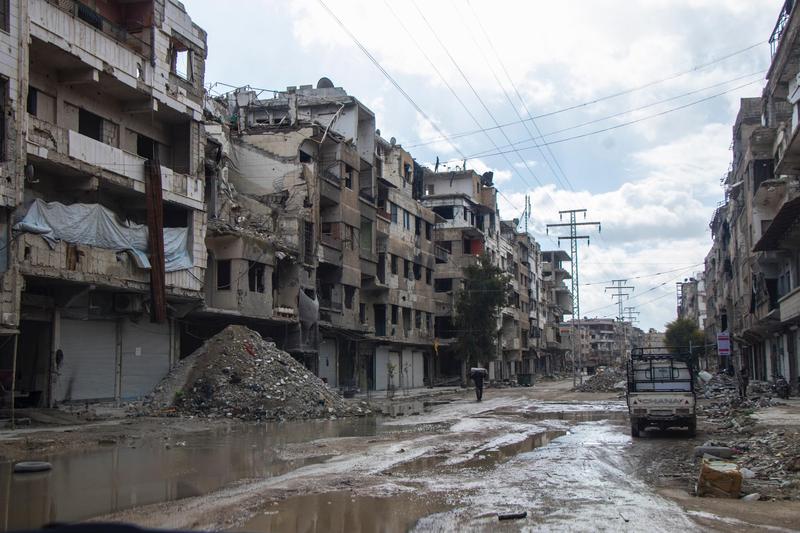
This study traces Canada’s contribution to the climate crisis, the impact of the climate crisis on communities and livelihoods globally in the form of displacement, and Canada’s current response to climate displacement. A qualitative critical policy discourse analysis of government publications is conducted to inquire if Canada is pursuing a securitized approach to climate displacement. The results of the study are used to argue that Canada risks upholding climate coloniality through border securitization. Using these findings, the paper urges Canada to embody climate justice rather than pursuing a securitized approach to climate displacement by asserting that Canada has a responsibility to repay its climate debt to countries in the Majority World. The study concludes with recommendations on how Canada can uphold climate justice within the context of global climate displacement.

From Humanitarianism to Securitization: The Shift in Political and Media Discourse on Tamil Refugees Arriving by Sea in Canada

Runner-up of the 2021 Canadian Association for Refugee and Forced Migration Studies Undergraduate Student Essay Contest.

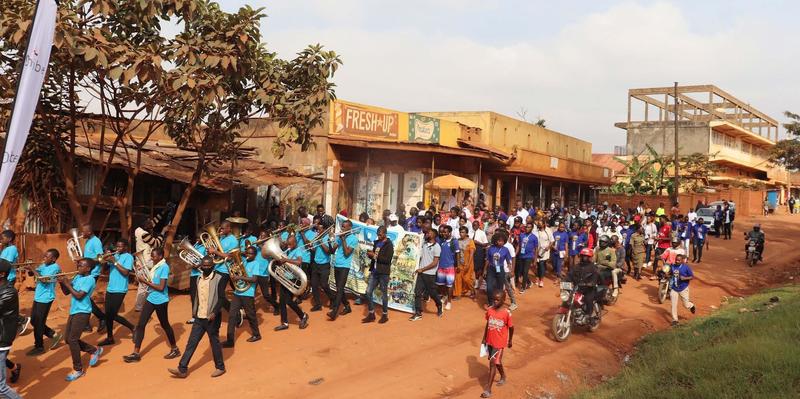
As displacement increases and the Majority World hosts most refugees, political and media discourse play a key role in representing individuals seeking protection in Western nations. To explore Canada’s attitudes towards refugees, this paper undertakes a comparative analysis on the political and media discourse surrounding Tamil refugees fleeing persecution and genocide in Sri Lanka and arriving by sea in Canada in 1986, 2009 and 2010. The analysis finds that while humanitarianism dominated the 1986 discourse, political and media actors reinforced each other’s rhetoric to promote a negative and securitized outlook in 2009 and 2010 by labelling Tamil refugees as “illegals,” “queue jumpers,” “criminals” and “terrorists.” This shift is explained in the
broader context of the securitization of migration discourse and policies in Canada and globally, which continues to undermine the right to seek asylum and results in individuals resorting to dangerous methods of accessing protection.

Policy Work

Reports, briefs and articles for which I provided research, analysis and drafting support in different organizations.

Resourcing Refugee Leadership Initiative: 2023 Impact Report

This report presents the impact of the Resourcing Refugee Leadership Initiative (RRLI) during 2022-23. It covers the impact of the programs and services provided by the RRLI coalition members, as well as the RRLI’s refugee-led partners in Colombia, Egypt, Indonesia, Lebanon, and Uganda. The report also highlights the achievements of RRLI’s Strengthening RLOs Partnership Program in the five countries where RRLI currently operates. Finally, it outlines how RRLI is advocating for systemic change by working toward shifting power and resources to refugee-led organizations globally.

Shifting power in forced displacement: the need for internal organisational change

Increasingly, global actors recognise that those with lived experience of forced displacement and their host community allies are sustainably and cost-effectively driving holistic, community-driven solutions in refugee-hosting communities. However, those with lived experience and their allies are too often excluded in the current humanitarian and development system and are least likely to receive financial support or be included in key strategising and decision-making processes.

Political and Social Barriers to Scaling Humanitarian Innovation

Within the humanitarian innovation landscape, innovators often experience a myriad of barriers or challenges when embarking upon their journey to scale. Although existing literature highlights the challenges and barriers to scale in humanitarian innovation, social and political barriers in the sector - such as gender, racial inequity, and imbalances in power – add another layer of complexity to already defined barriers in innovation, and yet, have received less attention in the literature.

Refugee Resettlement and Complementary Pathways: Opportunities for Growth

By the end of 2020, 20.7 million refugees had been displaced from their countries of origin and sought protection under the mandate of UNHCR, the UN Refugee Agency. While some may eventually be able to return to their countries of origin or integrate locally into the society of their host country, for the most at risk, resettlement remains a critical tool for addressing their displacement by providing secure legal status and access to fundamental rights in a third country.